
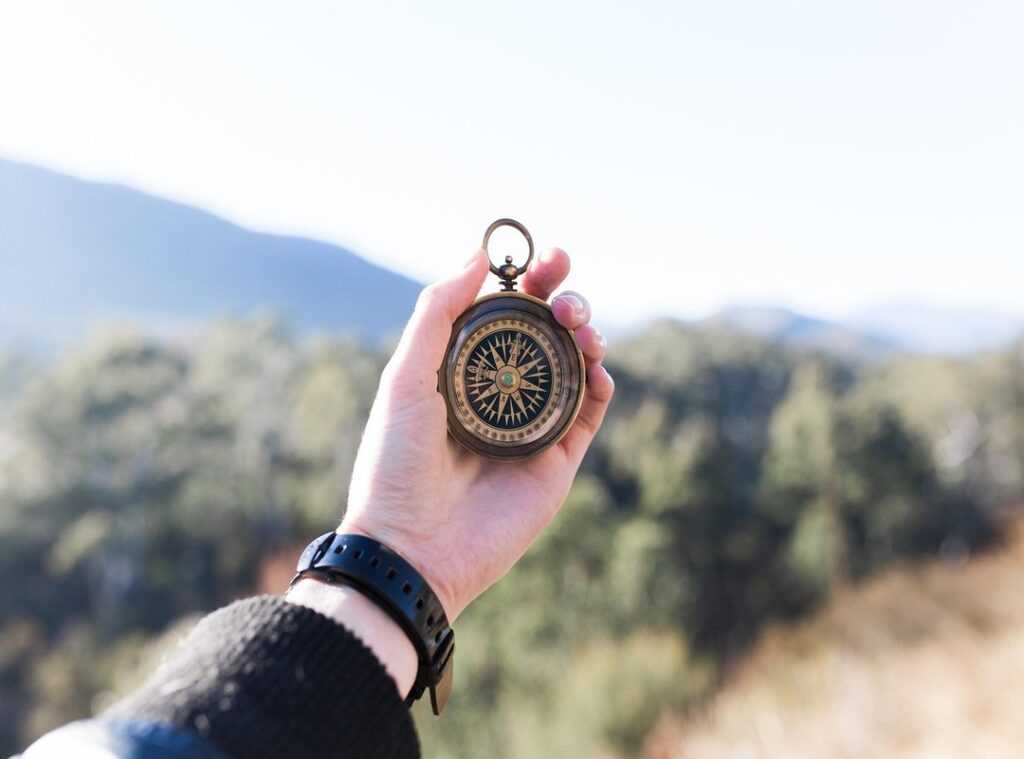
Ever had your phone die right when you needed it most? Like on a trail, miles from anywhere, and suddenly you’re lost? That sinking feeling is all too familiar.
But there’s hope. A compass never runs out of battery. It’s a tool that’s stood the test of time.
You might think it’s some outdated relic, but trust me, it’s far from it. I’ve spent countless hours in the wild, relying on a simple magnetic needle instead of satellites. Why?
Because it works. This article isn’t some boring manual. It’s a practical guide that’ll get you using a compass with confidence.
You’re here for compass navigation tips. You’ll get that and more. Ready to get through the world without fear?
Meet Your New Best Friend: Compass Anatomy
You might think a compass is just a simple gadget. I mean, it’s not rocket science. But here’s the kicker: understanding its parts can make it useful.
Imagine trying to slice bread with a knife without knowing which side is sharp. Same idea.
Let’s break it down. The baseplate is your clear plastic foundation. It’s what you hold onto.
Then there’s the direction-of-travel arrow. Point it where you want to go. That’s your guide.
Next up, the housing (or bezel). This rotating dial has degree markings from 0 to 360. You’ll get cozy with this as you figure out your bearings.
The heart of it all? The magnetic needle. Usually red and always pointing north.
Align it with the orienting arrow inside the housing. That’s when the magic happens.
Now, magnetic declination. Sounds fancy, but it’s just the difference between where the needle points and true north on a map. Check local declination online before a trip.
For basic navigation? Just follow the needle. You’ll be fine.
Want more on this? Check out backpacking basics load pack for tips on gearing up. Ready to get through like a pro?
Find Your Way: Mastering the Compass Dance
Ever been lost in the woods? It’s a miserable feeling, isn’t it? Let’s fix that.
Here’s how we start: finding magnetic north. Hold your compass flat and level. Not on the phone or next to your belt buckle (metal messes with it).
Just in your palm. Wait for the red end of the needle to settle. That’s magnetic north.
Now, rotate the bezel until the orienting arrow lines up underneath that red needle. The ‘N’ on the bezel should be pointing north. You’ve just tamed the compass to find its direction. Feeling like a pro yet?
Next up, tackle taking a bearing. Imagine you’re eyeing a tall pine across a meadow. What do you do?
Point the direction-of-travel arrow straight at that tree. Hold it steady. Now, twist the bezel again.
The orienting arrow needs to align with the red needle. This part’s key or you’ll end up in a creek instead of at the tree.
Check the number on the bezel that aligns with your direction-of-travel arrow. That’s your bearing, say 45 degrees. Easy, right?
Those are the basics of compass navigation tips. Got it all down? If not, repeat it.
Practice makes it stick.
Pro tip: Always trust the compass, not your gut. Your gut can get hungry and lead you astray. Happy navigating, adventurer!
Walking Straight in the Wild
So, you’ve got a bearing. What now? Well, here’s where it gets interesting.
Forget the urge to constantly peek at your compass. Trust me, it’s more accurate to use the leapfrogging technique. You might wonder, what is leapfrogging?
It’s simple: pick a distant landmark along your travel line.
Think “45 degrees to the pine tree”. An example from earlier. Once you’ve set your bearing, look up.
Spot something unique, like a rock with character or a tree that seems a little bent out of shape. Walk there without checking the compass every second.
When you arrive, repeat the dance. Hold your compass, confirm the bearing, and find your next target on the same line. This method keeps you focused on the terrain and stops that annoying drift you get from staring down.
Plus, it keeps you grounded, literally.
Why is this better than always gazing down at a compass? Because you engage with the environment. You see things.
Textures, colors, shadows. It’s almost meditative, and you notice details you’d otherwise miss. Ever seen a squirrel give you the side-eye?
Here’s a pro tip: Don’t rush. Enjoy the journey, not just the destination. And speaking of destinations, if you’re into more survival skills, check out this foraging edible plants guide.
It’s a handy companion to your navigation skills.
Remember, navigating is an art, not just a science. Trust your instincts and the landmarks, not just the needle pointing north. Isn’t that what real adventure is all about?
Level Up: Marrying Your Compass and Your Map
Ever been out in the woods, staring at a map, and wondering, “What’s next?” I have. It’s a real pain when you’re lost in the wilderness. So, let’s cut through the confusion and talk about getting that map right.

The magic trick? Orienting your map. It’s the key to true navigation.
First thing’s first. You need to place your compass on the map. Sounds simple, right?
Just make sure you ignore the needle for now. Why? Because if you don’t, it’ll just distract you from what really matters (like a squirrel at a dog park).
Next, align the compass baseplate’s long edge with the north-south grid lines on your map. The direction-of-travel arrow has to point toward “North” at the top of the map. It’s like a scene out of an action movie, only with fewer explosions.
Here’s where it gets good. Holding your map and compass together, turn your body until the red magnetic needle is boxed inside the orienting arrow. Now, you’re not just holding a piece of paper.
You’re holding a window to the world around you.
And bam! Your map is aligned with the terrain. The creek on the map?
It’s in the same direction as the real creek. It’s practically screaming, “Look at me!” These compass navigation tips are what separate the wanderers from the lost.
Pro tip: Always practice this before you actually need it. Because trust me, confidence goes a long way in the wild (and in life, really).
Watch Your Step: Common Compass Mistakes to Avoid
When you’re out in the wild, the last thing you want is to get lost because of a simple mistake. Metal interference is a common issue. Ever tried using a compass near your car or phone? It’s like asking for trouble.
I once saw a reading go haywire just because of a pocket knife. Another mistake? Not holding it level.
If your compass is tilted, the needle drags and lies to you. It’s like trying to balance on a seesaw (not fun).
And don’t forget: compass navigation tips aren’t just theory. You have to practice. Treat it like a dance move.
Try it out in your backyard. Don’t wait until you’re lost to figure it out.
Step into the Wild with Confidence
Fear of getting lost? I get it. But you’ve got compass navigation tips now.
Trust yourself. Grab your compass, head outside, and practice. Your confidence is the best tool you can carry.
Want more guidance? Visit drailegirut.com for more outdoor skills. Don’t wait.
Adventure awaits!
 Trail Mapping & Exploration Coordinator
Joshua Harthormix has opinions about camp setup essentials. Informed ones, backed by real experience — but opinions nonetheless, and they doesn't try to disguise them as neutral observation. They thinks a lot of what gets written about Camp Setup Essentials, Core Outdoor Skills and Tactics, Hidden Gems is either too cautious to be useful or too confident to be credible, and they's work tends to sit deliberately in the space between those two failure modes.
Reading Joshua's pieces, you get the sense of someone who has thought about this stuff seriously and arrived at actual conclusions — not just collected a range of perspectives and declined to pick one. That can be uncomfortable when they lands on something you disagree with. It's also why the writing is worth engaging with. Joshua isn't interested in telling people what they want to hear. They is interested in telling them what they actually thinks, with enough reasoning behind it that you can push back if you want to. That kind of intellectual honesty is rarer than it should be.
What Joshua is best at is the moment when a familiar topic reveals something unexpected — when the conventional wisdom turns out to be slightly off, or when a small shift in framing changes everything. They finds those moments consistently, which is why they's work tends to generate real discussion rather than just passive agreement.
Trail Mapping & Exploration Coordinator
Joshua Harthormix has opinions about camp setup essentials. Informed ones, backed by real experience — but opinions nonetheless, and they doesn't try to disguise them as neutral observation. They thinks a lot of what gets written about Camp Setup Essentials, Core Outdoor Skills and Tactics, Hidden Gems is either too cautious to be useful or too confident to be credible, and they's work tends to sit deliberately in the space between those two failure modes.
Reading Joshua's pieces, you get the sense of someone who has thought about this stuff seriously and arrived at actual conclusions — not just collected a range of perspectives and declined to pick one. That can be uncomfortable when they lands on something you disagree with. It's also why the writing is worth engaging with. Joshua isn't interested in telling people what they want to hear. They is interested in telling them what they actually thinks, with enough reasoning behind it that you can push back if you want to. That kind of intellectual honesty is rarer than it should be.
What Joshua is best at is the moment when a familiar topic reveals something unexpected — when the conventional wisdom turns out to be slightly off, or when a small shift in framing changes everything. They finds those moments consistently, which is why they's work tends to generate real discussion rather than just passive agreement.