Setting up a tent can feel like wrestling a bear. You’ve got the gear, the location, maybe even a buddy to help, but somehow chaos ensues. Poles snap, tarps flap, and suddenly you’re doubting your life choices.
But it doesn’t have to be that way.
This tent setup guide is here to save you from the madness. How many times have you ended up sleeping under the stars (unintentionally)? I’ve been there too.
It’s frustrating.
This isn’t just about pitching fabric and poles. It’s about mastering a skill that transforms your outdoor experience. Imagine setting up camp effortlessly, enjoying the wilderness without a hitch.
You’ll learn the secrets from seasoned adventurers who know their way around the wilderness like a second home.
You’ll trust this guide because it’s backed by experts who know the terrain and the techniques.
By the end of this, you’ll be the person others look to for help. Ready to transform your camping game? Let’s get started.
Step 1: Groundwork & Gear Check
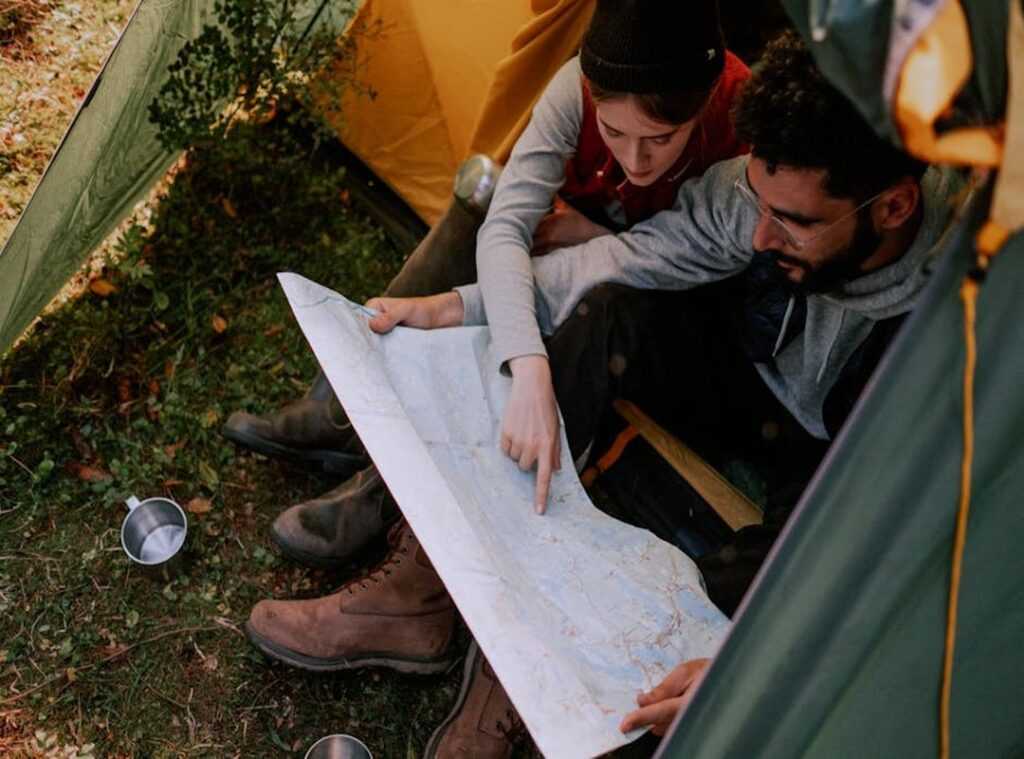
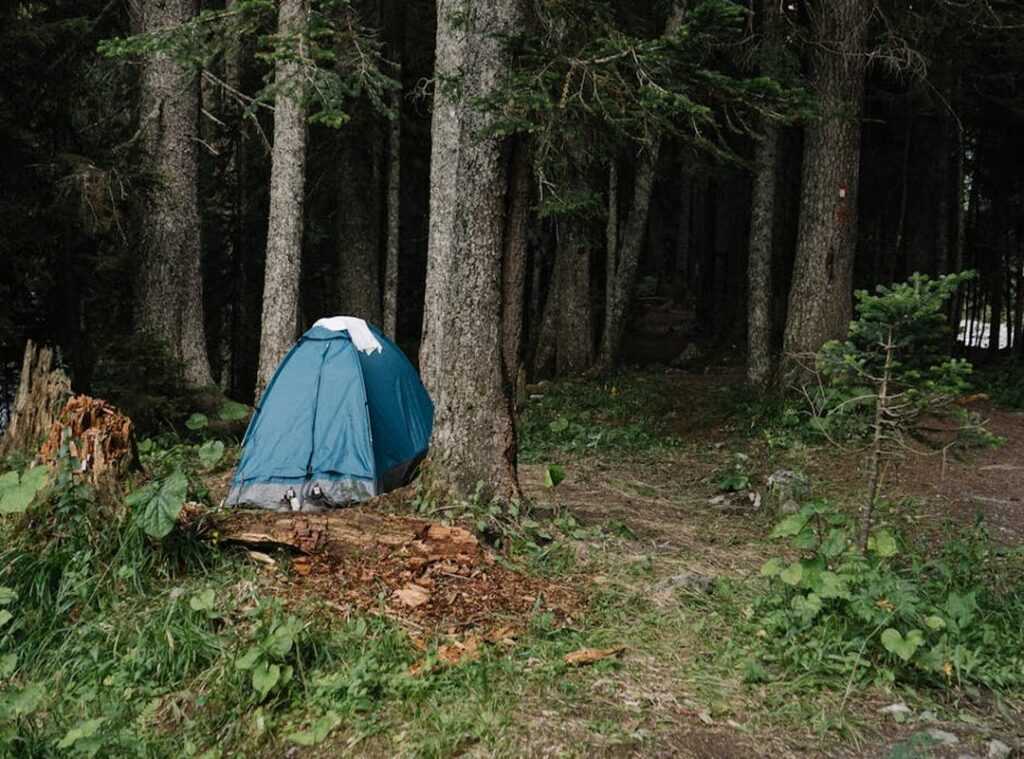
Before you even think about unrolling that tent, you’ve got to lay the groundwork. Think of it as the “measure twice, cut once” of camping. Picking the right spot is key.
You want level ground, away from low-lying areas that could turn into lakes overnight. And watch out for those overhead hazards (widowmakers, anyone?).
Now, let’s talk about your tent’s best friend: the footprint or ground tarp. It’s like a shield. It protects your tent floor from rocks, sticks, and all the moisture Mother Nature throws at you.
Without it, you’re basically inviting nature inside.
Before you dive into the setup, take inventory. Unpack everything. Know your inner tent body from your rainfly.
Identify the poles (main ones and sometimes a sneaky smaller one for the fly). And don’t forget the stakes. This prevents those mid-assembly moments of panic when you realize something’s missing.
Trust me, this prep work will save you from wrestling with your tent later. It’s about organizing campsite efficiency. Being prepared makes the whole setup process smoother.
Who wants to deal with a tent disaster at dusk? Not me. Not you.
Step 2: Raising the Skeleton & Securing the Body
Setting up a tent isn’t rocket science, but it’s not exactly a walk in the park either. This tent setup guide will help you get it right. Start by unfolding the inner tent body and orienting it.
Look for the door and face it where you want your morning view. (Trust me, you’ll thank me when you’re sipping coffee and watching the sunrise.)
Next up, the shock-corded poles. Think of them like a spine. You’re connecting vertebrae to form a backbone.
The poles snap together with a satisfying click. Now, there are two ways to attach these: sleeves or clips. Each has a different vibe.
If you’re using sleeves, push the poles through them. Don’t pull. That’s a rookie mistake.
Pulling can separate the segments, and no one wants that hassle.
Now, for the big moment: the ‘flex and raise’. Place one end of a pole in a corner grommet. Gently bend it into an arch and secure the other end.
This is when your tent starts looking like a tent. Kind of magical, right?
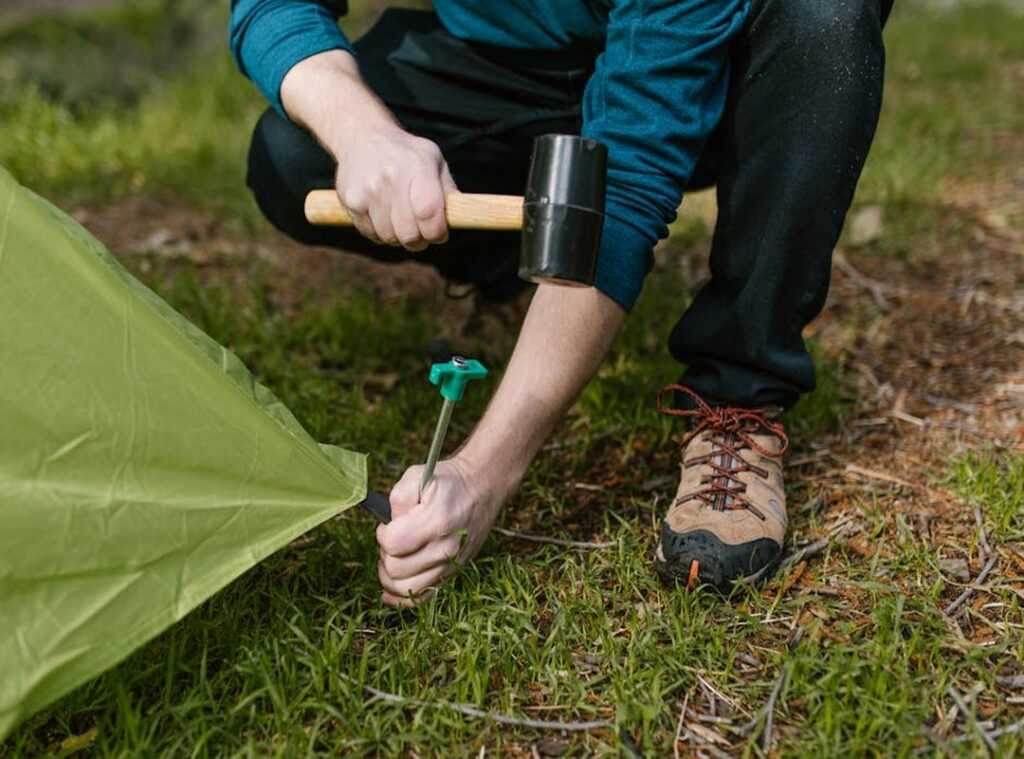
Staking the tent is where the real muscle comes in. Drive stakes in at a 45-degree angle, away from the tent. This gives the strongest hold.
The corners should be taut, but not so tight you’re risking a tear. (The last thing you need is a ripped tent in the middle of nowhere.)
And there you have it. With this setup, you’ve got a solid campsite. Whether it’s for a weekend in the woods or a quick getaway, knowing how to properly raise and secure your tent is key.
Happy camping!
Rainflies and Guylines: Your Tent’s Lifesavers
Let’s be real. The rainfly is your tent’s raincoat and windbreaker. It’s not optional, and if you’re skipping it, you’re asking for a miserable night.
I learned this the hard way during a particularly wet weekend in the Smokies. Trust me, nothing sobers you up faster than waking up in a puddle.
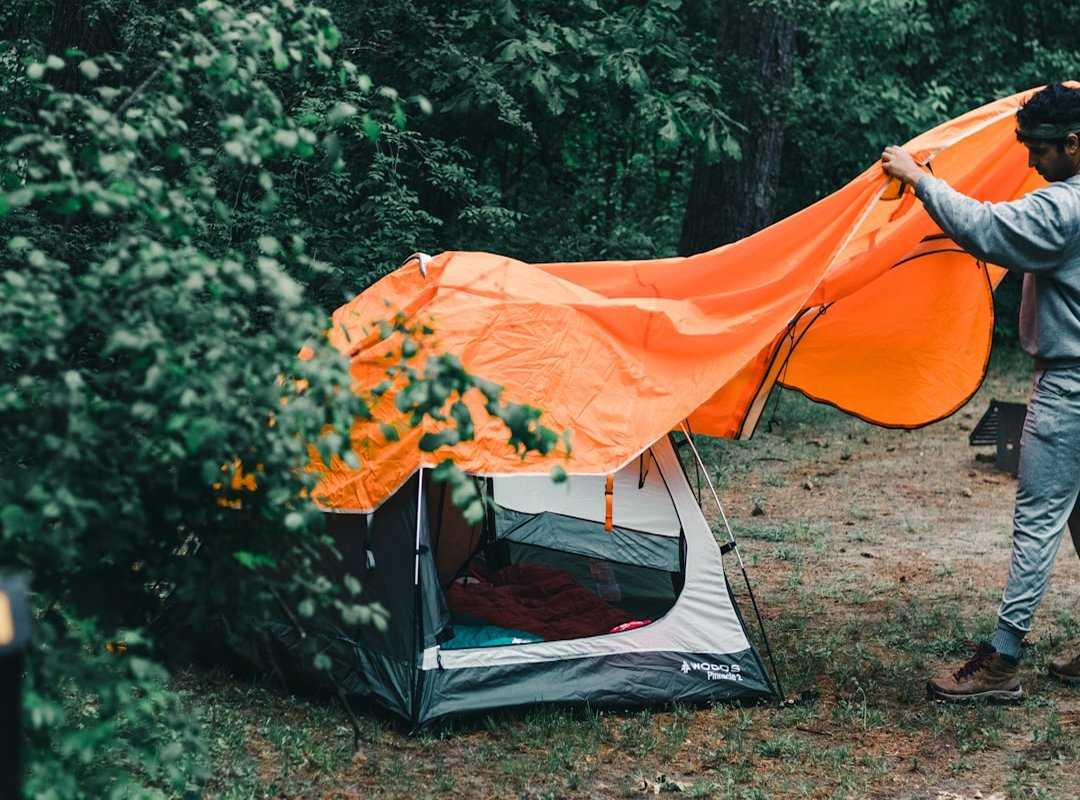
First things first, throw the rainfly over your tent. But there’s a right way to do it. Look for the logo.
It usually goes over the main door. Make sure those waterproof-taped seams are facing in. Got it?
Good.
Now, securing the rainfly. Every tent’s a bit different, but most have buckles or clips. Find them and latch each corner to the corresponding ones on the tent body.
Tighten those straps. Don’t leave it loose. This isn’t a high school dance, it’s camping.
Here’s a pro tip: test this whole setup at home first. Seriously. And while you’re at it, learn how to create a vestibule.
It’s like a mudroom for your gear. Stake out the section of the rainfly by the door. Instant covered storage.
Oh, and guylines. Don’t skip them. They’re not just string.
These babies keep your tent steady when the wind’s trying to turn it into a kite. Find the guyline loops on the rainfly. Attach and stake them out a few feet from the tent.
Tension is key here. No sagging allowed.
If you’re still sketchy on where to pitch your tent, check out these Choosing Right Campsite Considerations.
Because if you’re setting up on a slope or under a dead tree, no amount of weatherproofing will save you.
Get all these steps right, and you’ll have a fortress ready for whatever nature throws at you.
Tent-Pitching Blunders: Avoid These Rookie Errors
Every camper’s been there, right? You’re out in the wild, wrestling with your tent like it’s a rebellious teenager. One common mistake?
Forcing the poles. It’s tempting to rush it, but use brute strength and you’ll end up with ripped sleeves or snapped sections. Slow down.
Feel for snags and be gentle. Your tent will thank you, and so will your sanity.
Ever seen a tent flutter like a flag in the wind? That’s what happens with sloppy staking. A loose, vertical stake simply won’t cut it.
A taut, 45-degree angle is what you need. It’s the difference between a tent that stands firm and one that collapses in a gust.
Then you’ve got the rainfly fiasco. Putting it on inside-out or backward? Rookie mistake!
Always check seams and logos. It might seem obvious, but in the rush to set up before dark, it’s easy to miss.
And what about those guylines? Ignoring them would be like setting sail without an anchor. Those lines provide key stability.
Use them. Trust me, no one wants to chase their tent down a hill during a storm.
Finally, there’s the door. Leave it slightly unzipped during setup. This avoids pressure buildup and gives you some wiggle room to work.
Simple but effective, right?
Getting these things right separates the pros from the newbies. If you’re still puzzled, check out this tent setup guide for more tips. Next time you’re out there, let your camp setup be the envy of the site (without breaking a sweat).
Two-Minute Camping Tips – Quick Wins
Ever try setting up a tent in the wind? It’s like wrestling an octopus. The secret?
Stake down the upwind corner first. Want an easy exit plan with your tent? Fold the body and rainfly to match the pole bag’s width.
This tip makes pack-up a breeze. Also, check out any decent tent setup guide before you head out.
Adventure Awaits
Setting up camp used to be a nightmare, right? But with this tent setup guide, that chaos is history. You’ve crafted your wild home with ease.
Frustrated by those old, confusing instructions? Not anymore. Now, your shelter stands tall and ready for adventure.
So, why wait? Dive into nature’s wonders. The wilderness is calling.
Experience the trails, feel the freedom. Ready to explore? Your next journey is just a step away.
Go enjoy the wild.
 Trail Mapping & Exploration Coordinator
Joshua Harthormix has opinions about camp setup essentials. Informed ones, backed by real experience — but opinions nonetheless, and they doesn't try to disguise them as neutral observation. They thinks a lot of what gets written about Camp Setup Essentials, Core Outdoor Skills and Tactics, Hidden Gems is either too cautious to be useful or too confident to be credible, and they's work tends to sit deliberately in the space between those two failure modes.
Reading Joshua's pieces, you get the sense of someone who has thought about this stuff seriously and arrived at actual conclusions — not just collected a range of perspectives and declined to pick one. That can be uncomfortable when they lands on something you disagree with. It's also why the writing is worth engaging with. Joshua isn't interested in telling people what they want to hear. They is interested in telling them what they actually thinks, with enough reasoning behind it that you can push back if you want to. That kind of intellectual honesty is rarer than it should be.
What Joshua is best at is the moment when a familiar topic reveals something unexpected — when the conventional wisdom turns out to be slightly off, or when a small shift in framing changes everything. They finds those moments consistently, which is why they's work tends to generate real discussion rather than just passive agreement.
Trail Mapping & Exploration Coordinator
Joshua Harthormix has opinions about camp setup essentials. Informed ones, backed by real experience — but opinions nonetheless, and they doesn't try to disguise them as neutral observation. They thinks a lot of what gets written about Camp Setup Essentials, Core Outdoor Skills and Tactics, Hidden Gems is either too cautious to be useful or too confident to be credible, and they's work tends to sit deliberately in the space between those two failure modes.
Reading Joshua's pieces, you get the sense of someone who has thought about this stuff seriously and arrived at actual conclusions — not just collected a range of perspectives and declined to pick one. That can be uncomfortable when they lands on something you disagree with. It's also why the writing is worth engaging with. Joshua isn't interested in telling people what they want to hear. They is interested in telling them what they actually thinks, with enough reasoning behind it that you can push back if you want to. That kind of intellectual honesty is rarer than it should be.
What Joshua is best at is the moment when a familiar topic reveals something unexpected — when the conventional wisdom turns out to be slightly off, or when a small shift in framing changes everything. They finds those moments consistently, which is why they's work tends to generate real discussion rather than just passive agreement.