When you’re lost or stranded outdoors, nothing matters more than water. Dehydration can weaken your judgment, drain your strength, and turn a manageable situation into a life-threatening emergency within hours. This guide delivers a clear, field-tested framework for wilderness water sourcing, showing you how to locate, collect, and purify water in any environment. Built on decades of real-world survival experience across diverse terrains, these methods prioritize proven, reliable techniques over theory. You’ll learn how to identify safe water sources, avoid dangerous ones, and apply practical purification steps to stay hydrated, alert, and alive when it matters most.
Identifying Reliable Water Sources: A Survivor’s Checklist
Let’s challenge a popular myth right away: CLEAR water is NOT always clean water. In wilderness water sourcing, appearance can deceive (crystal-clear can still mean parasite party). Safety comes from smart selection and purification—not wishful thinking.
Moving Water: Good, But Not Magic
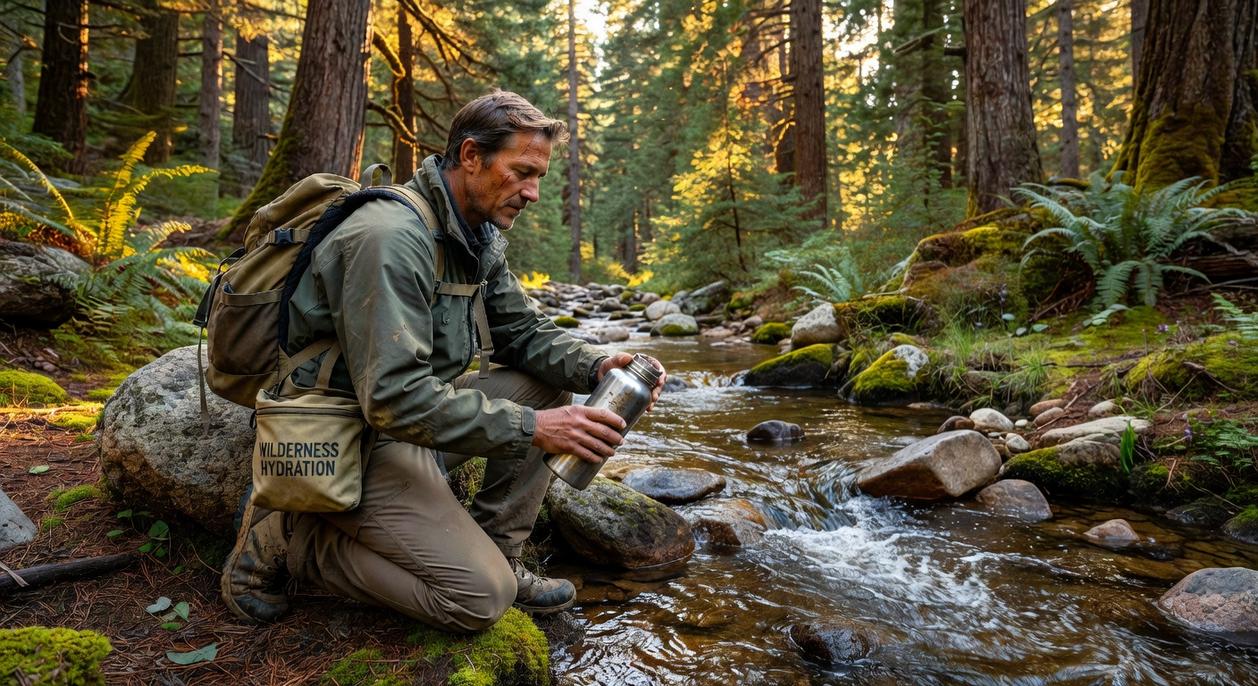
Rivers, streams, and creeks are usually your best bet. Flowing water is less likely to host heavy bacterial buildup because movement limits stagnation and increases aeration (oxygen mixing into water). That said, upstream contamination—from animal carcasses to human runoff—can still exist. Always filter and purify. Pro tip: collect from faster-moving sections rather than calm pools.
Lakes and Ponds: Choose Carefully
Many survival guides treat lakes as equally safe alternatives. I disagree. They’re riskier than most admit. Stagnant edges breed algae and microbes. Instead, gather water from:
- Inlet points where streams feed the lake
- Outlet areas where water exits
- The clearest section away from marshy banks
Avoid areas with heavy plant decay (that swampy smell is a warning sign).
Natural Springs and Seeps: The Gold Standard
Water emerging directly from the ground—often at the base of hills—is typically filtered naturally through soil and rock. This process removes many contaminants. Still, “natural” doesn’t mean sterile. Filter anyway.
Morning Dew and Rainwater: Overlooked Winners
Rainwater is excellent because it hasn’t contacted contaminated surfaces. Use a tarp or poncho as a catchment system. For dew, tie absorbent cloth around your ankles and walk through tall grass at sunrise (yes, you’ll look ridiculous—hydrate anyway).
| Source | Risk Level | Best Collection Spot |
|——–|————|———————|
| Stream | Moderate | Fast-moving center |
| Lake | Higher | Inlet/Outlet |
| Spring | Low | Direct emergence |
| Rain | Low | Clean tarp surface |
Trust flow, elevation, and movement—not assumptions.
Warning Signs: Water Sources to Approach with Extreme Caution
In survival, smart avoidance can save more energy than risky treatment. Knowing what not to drink is a core part of wilderness water sourcing—and it protects you from threats you can’t always see.
-
Stagnant Pools and Puddles
These are breeding grounds for bacteria (microscopic disease-causing organisms), protozoa like Giardia, and mosquito larvae. Think of them as nature’s neglected bathtubs (and nothing good grows there). Even after boiling, toxins may remain. This is a last-resort source requiring aggressive purification and filtration. -
Water Near Industrial or Agricultural Runoff
Oily sheens, strange colors, chemical smells, or a complete lack of fish signal danger. Pesticides and heavy metals won’t disappear with boiling. Avoiding these sources prevents long-term organ damage—far better than gambling on a quick sip. -
Seawater
Never drink untreated saltwater. It accelerates dehydration. A solar still—using evaporation and condensation—is the only viable emergency method.
Understanding these risks improves your odds and complements planning like emergency shelter options for different climates.
Purification Methods: The Non-Negotiable Steps to Safe Water
When it comes to wilderness water sourcing, “clear” does not mean “clean.” Pathogens—disease-causing microorganisms like bacteria, viruses, and protozoa—are invisible to the naked eye. So let’s break down the core purification methods in plain terms.
Boiling is the gold standard. A rolling boil (vigorous, bubbling water that cannot be stirred down) for at least one minute kills all major pathogens. Add one extra minute for every 1,000 feet of elevation because water boils at lower temperatures higher up. Some argue boiling is inconvenient because it requires fuel. True—but reliability outweighs inconvenience (especially when your stomach is on the line).
Commercial filters vs. purifiers often confuse beginners. A filter physically removes protozoa and bacteria. A purifier goes further by also neutralizing viruses. For most backcountry trips, a hollow-fiber membrane filter is ideal: lightweight, fast, and effective against common threats. However, in areas with known viral contamination, a true purifier is safer.
Chemical treatments like iodine or chlorine dioxide tablets are lightweight and simple. Drop them in, wait, and you’re covered. Pros: compact and effective. Cons: noticeable taste, longer wait times, and reduced performance in cold or murky water. Pro tip: pre-filter cloudy water to improve effectiveness.
UV light purifiers work by scrambling pathogen DNA, rendering them unable to reproduce. They’re fast and taste-neutral. However, they depend on batteries and require clear water to work properly.
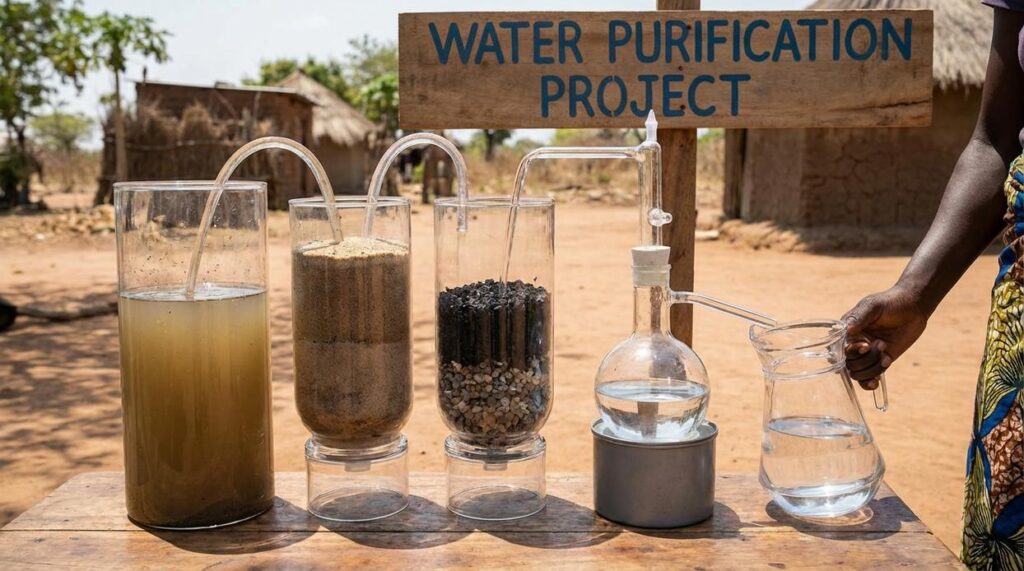
Before any of these, consider improvised pre-filtration to remove sediment:
- Layer cloth, sand, charcoal, and gravel in a tripod setup
- Pour water slowly through each layer
- Collect filtered water for final purification
Remember, improvised filtration removes debris—not pathogens. Always follow with boiling, chemicals, or UV treatment.
Mastering Hydration: Your Key to Wilderness Survival
You now hold a complete system for staying hydrated, but systems only matter if they work under pressure. And the data is clear: according to the CDC, dehydration can impair physical performance by up to 25% and significantly reduce cognitive function, increasing the risk of poor decisions in survival scenarios. In the backcountry, poor decisions compound fast.
That’s why wilderness water sourcing must follow a strict hierarchy. First, locate the cleanest available source—flowing springs statistically contain fewer pathogens than stagnant pools. Next, pre-filter debris using cloth or a tripod sediment filter to remove particulates. Finally, purify by boiling (the WHO confirms one minute at a rolling boil kills most pathogens) or by using certified filtration systems.
Consider this simple breakdown:
- Best source: Flowing spring or fast-moving stream
- Second best: Clear lake water, pre-filtered
- Last resort: Murky pond water, heavily filtered and boiled
Some argue modern gear makes strict processes unnecessary. However, field case studies from search and rescue teams repeatedly show contamination occurs when steps are skipped. Even clear water can harbor Giardia (yes, the microscopic villain of many camping horror stories).
So practice before you need it. Test your equipment. Build redundancy. Skill turns uncertainty into control—and control keeps you moving forward.
Mastering Wilderness Skills for Your Next Expedition
You set out to sharpen your outdoor skills and gain real confidence in the wild. Now you understand the core tactics—from navigation and camp setup to shelter building and wilderness water sourcing—that separate a stressful trip from a controlled, capable adventure.
The real pain point isn’t just getting lost or uncomfortable. It’s the uncertainty. It’s not knowing if you can rely on your skills when conditions shift, weather turns, or supplies run low. Mastering these fundamentals removes hesitation and replaces it with clarity and control.
Your next step is simple: put these skills into practice. Plan a short overnight trip. Test your trail mapping. Practice efficient camp setup. Rehearse water identification and purification techniques until they’re second nature. Skill turns into confidence only through action.
If you’re serious about becoming self-reliant outdoors, dive deeper into our advanced guides and field-tested strategies. Thousands of readers rely on our practical, no-fluff survival insights to stay prepared and capable. Don’t wait until you’re in a tough spot—start building real-world readiness today.