
If you’re searching for practical, field-tested guidance on outdoor survival, trail navigation, and camp setup essentials, you’re in the right place. Whether you’re preparing for a backcountry trek or sharpening your wilderness readiness, this article delivers clear, actionable insights designed to help you stay safe, self-reliant, and confident in the wild.
Many outdoor enthusiasts struggle to separate reliable survival strategies from outdated or overly simplistic advice. Here, we focus on proven core outdoor skills, precise trail mapping techniques, effective camp setup methods, and smart wildlife encounter tactics that can make the difference between a controlled situation and a dangerous one.
Our guidance draws from experienced field practitioners, established survival methodologies, and real-world outdoor scenarios to ensure accuracy and practicality. By the end of this article, you’ll have a stronger understanding of essential wilderness survival tactics and the knowledge to apply them effectively on your next adventure.
The Unspoken Rules of the Wild
You know the feeling: a hush on the trail, then a deer steps into view—awe mixed with uncertainty. However, that magic can shift fast. A wrong move, a selfie step too close, can stress or provoke an animal. Consequently, both human and wildlife pay the price.
Unlike generic advice, this guide goes beyond “keep your distance.” It explains why animals interpret eye contact as threat, how scent travels at dusk, and when backing away beats standing tall. In short, wildlife encounter tactics begin with one truth: we are visitors here, and action always echoes.
The Golden Rule: Master the Art of Distance
Have you ever wondered why a calm deer suddenly bolts—or why a seemingly relaxed moose pins its ears back? Distance is usually the difference. When you step too close, animals experience stress, which can spike heart rates and interrupt feeding, mating, or caring for young. In some cases, proximity triggers defensive attacks (and no, they’re not “overreacting”—they’re surviving).
The simplest safeguard is the Thumb Rule. Extend your arm, close one eye, and try to cover the entire animal with your thumb. If you can’t, you’re too close. It’s quick, practical, and easy to remember when adrenaline kicks in.
Think about it: would you rather rely on luck—or a method tested by seasoned hikers?
Better yet, use your tools. Binoculars, spotting scopes, or a camera’s zoom lens let you observe details without intruding. You get the shot; they keep their space. Everyone wins.
Also, check your surroundings:
- Never corner an animal or block its escape route.
If it can’t retreat, it may choose to confront. Practicing smart wildlife encounter tactics isn’t about fear—it’s about respect. Next time you’re on the trail, ask yourself: Am I observing… or interfering?
Why “A Fed Bear is a Dead Bear”: The Dangers of Feeding Wildlife
I learned this lesson the hard way.
Years ago, I tossed a granola bar to a curious raccoon at camp. It felt harmless at the time (and, admittedly, a little magical). However, that small mistake contributed to a much bigger problem. The animal returned the next night—bolder, closer, and far less afraid.
This is called habituation—when wildlife learns to associate humans with food and gradually loses its natural fear. In other words, we accidentally train animals to approach us. And once that fear is gone, encounters escalate quickly.
Moreover, human food can seriously harm animals. Processed snacks, salty scraps, even bread disrupt natural diets, leading to malnutrition, organ failure, or death. A fed animal often becomes a sick animal.
At the same time, danger shifts toward people. Habituated bears, raccoons, or coyotes may demand food, damage tents, raid coolers, or act aggressively. Property loss is common. Physical injury is possible.
That’s why unintentional feeding matters just as much. Secure trash, lock food in vehicles, and store scented items like toothpaste properly. Use wildlife encounter tactics in the section once exactly as it is given.
Ultimately, feeding wildlife doesn’t create connection. It creates conflict—and the animal usually pays the price.
Be Seen, Be Heard: Managing Your Presence on the Trail
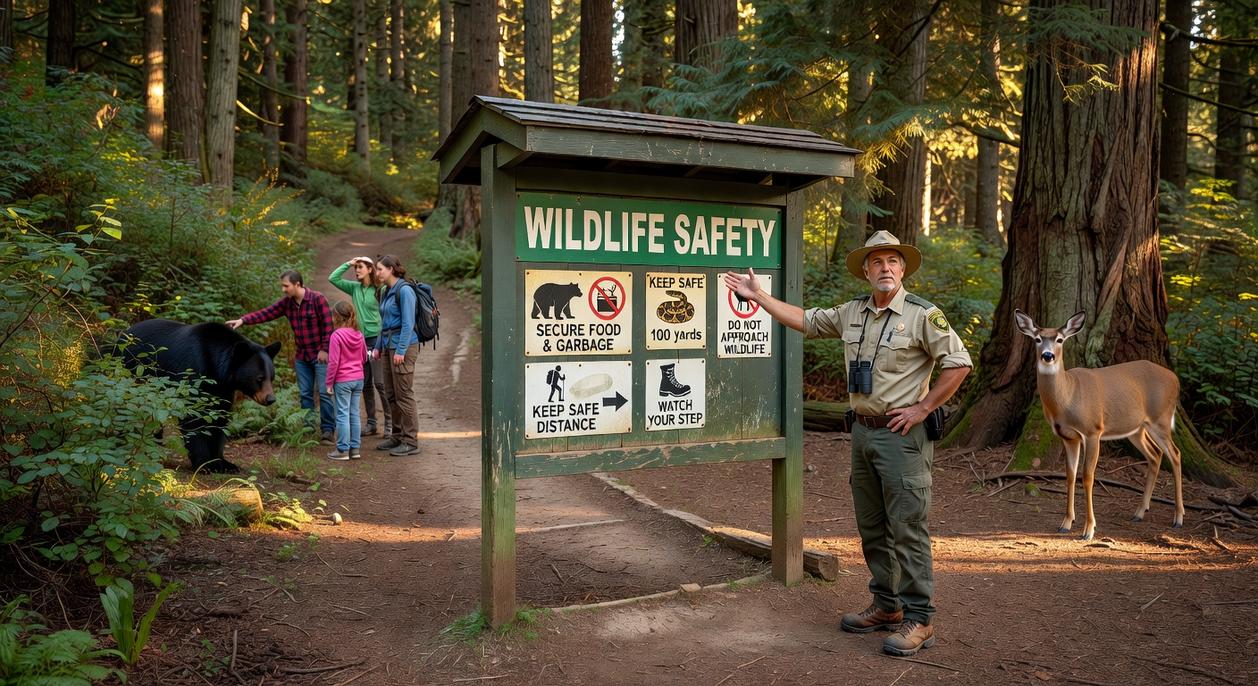
The safest wildlife encounter is the one that never happens. Avoid Surprises by making your presence known—talk, clap, or use a bear bell, especially in dense brush or near running water where visibility and sound travel are limited. According to the National Park Service, most bear incidents occur when hikers accidentally surprise animals at close range. Noise gives wildlife time to move away (and they usually want to).
Leash Your Pets—or consider leaving them home. Studies from Colorado Parks and Wildlife show that off-leash dogs are a leading trigger in defensive wildlife attacks. Dogs may chase moose or bears, then sprint back to their owner with an angry animal behind them. It’s a predictable chain reaction.
Be Aware of Time and Place. Many species are crepuscular—most active at dawn and dusk. Extra caution during these hours reduces risk significantly.
Read the Signs. Fresh tracks, scat (animal droppings), claw marks, or disturbed ground signal recent activity. Slow down and heighten awareness in these zones.
These wildlife encounter tactics aren’t paranoia—they’re prevention. Pro tip: practice the observation habits covered in essential bushcraft skills every outdoor enthusiast should master to sharpen trail awareness before you need it.
When Paths Cross: Your Action Plan for Close Encounters
Out on the trail, surprises happen. And while plenty of experts preach rigid rules, I believe mindset matters most. First, breathe. Panic clouds judgment. Universal First Steps: Stay calm. Never run, as it can trigger a predator’s chase instinct. Do not make direct eye contact. Pick up small children immediately.
Next, size and sound are your allies. Encountering Bears or Mountain Lions: Make yourself look as large as possible. Make loud noises. Back away slowly, never turning your back.
Meanwhile, don’t underestimate grazers. Encountering Moose
Elk, or Bison: These herbivores are powerful and territorial. Give them a very wide berth. Back away slowly and put a large object like a tree or boulder between you and the animal.
If an Animal Approaches: Stand your ground. If it’s a predator and it continues to advance, become more aggressive (shout, wave your arms, throw rocks). Understand the difference between defensive and predatory behavior.
Some argue you should always play dead, but I disagree; context is everything. Defensive animals want space, predators test resolve. In my view, practicing wildlife encounter tactics before you need them builds calm confidence (and that’s half the battle). outdoors.
Leave no trace, take only memories. Safe, respectful interaction with the wild is rooted in awareness and prevention, not confrontation. I believe the strongest hikers are the quietest ones; they move through forests like careful guests, not conquering heroes (nature doesn’t need conquering). Think of yourself as a silent observer, here to witness, not rewrite, the landscape. Practice wildlife encounter tactics before you need them, so reactions stay calm and measured. Your presence should be temporary, your impact invisible. Internalize these principles, and every journey becomes positive for you—and neutral for the creatures watching back. Long after you leave, quietly.
Take Your Outdoor Skills Further
You set out to sharpen your survival knowledge and feel more confident in the wild. Now you understand the core skills, trail mapping essentials, camp setup fundamentals, and the importance of wildlife encounter tactics when conditions turn unpredictable.
The real pain point isn’t just getting outdoors — it’s not knowing how to respond when something goes wrong. Uncertainty in the wilderness can quickly turn into fear, hesitation, or costly mistakes. Preparation is what separates a stressful trip from a controlled, capable response.
Your next step is simple: put these skills into practice and deepen your training. Explore more advanced guides, refine your gear systems, and pressure-test your knowledge before your next expedition.
If you’re serious about becoming self-reliant outdoors, start building your complete survival system today. Join thousands of prepared adventurers who rely on our field-tested guidance to stay ready for anything. Don’t wait until you’re in the wild to realize you’re unprepared — equip yourself now and step outside with confidence.