
Heading into the wild without the right knowledge can turn an unforgettable adventure into a dangerous mistake. Whether you’re planning a backcountry trek, setting up a remote campsite, or refining your trail navigation skills, you’re likely searching for clear, practical guidance you can trust. This article delivers exactly that—covering essential outdoor skills, proven wilderness survival tactics, reliable trail mapping strategies, and efficient camp setup techniques designed for real-world conditions.
At the heart of every successful outdoor experience is situational awareness in wilderness. Understanding your environment, anticipating risks, and making informed decisions can mean the difference between confidence and crisis. The insights shared here are built on field-tested practices, established survival principles, and guidance aligned with modern outdoor safety standards.
By the end, you’ll have actionable knowledge to prepare smarter, travel safer, and navigate the outdoors with greater confidence—whether you’re a beginner explorer or sharpening advanced backcountry skills.
Step past the trailhead and the world goes quiet. Air sharpens, phones fade, and freedom feels close enough to touch. But wilderness plays by older, stricter rules. The real danger isn’t a bear or lightning; it’s inattention. Mastering situational awareness in wilderness gives you control, not paranoia. You’ll learn to:
- Scan terrain for subtle changes.
- Think ahead about weather, water, and wildlife.
- Act early before small issues escalate.
These habits turn fear into focused awareness, reduce preventable mistakes, and build calm confidence mile after mile. Research shows incidents stem from human error, not attacks (National Park Service).
The last time a storm rolled over the ridge, I learned this the hard way. I had ignored the basics of situational awareness in wilderness, assuming blue skies would hold. They did not.
That experience shaped my Three Pillars of risk assessment.
Pillar 1: The Environment
• Scan weather shifts, unstable terrain, wildlife sign, and fading daylight.
Mountains create their own forecasts, and dusk turns simple trails complex.
Pillar 2: Your Gear
• Ask: Is your rain shell buried or ready?
Functionality beats ownership; a wet map helps no one.
Pro tip: stage essentials where your hands can reach fast.
Pillar 3: Yourself
• Check energy, hydration, morale, and skill limits.
Most emergencies stem from human factors, not monsters in the woods.
Fatigue whispers shortcuts; pride shouts “keep going.”
Pause, breathe, reassess.
What could change in the next hour?
Risk evolves, and so must you.
Stay alert and stay humble.
Decoding the Environment: Weather and Terrain Hazards
In the backcountry, weather and terrain are like two unpredictable characters in a thriller—quiet one moment, dangerous the next. Your job is to read their mood shifts before the plot twists.
Recognizing Shifting Weather Patterns
Storms rarely arrive unannounced. Fast-moving, darkening clouds—especially towering cumulonimbus—are nature’s skyscrapers of trouble. When you see them building vertically, think of a pot about to boil over. A sudden temperature drop or wind shift is another red flag; it’s the atmosphere rearranging the furniture before chaos begins. Increased insect activity can also signal pressure changes (yes, bugs are better meteorologists than most apps). According to the National Weather Service, cumulonimbus clouds often precede thunderstorms capable of lightning, hail, and flash floods. Pro tip: check the sky every 30 minutes, even on bluebird days.
Responding to Unforgiving Terrain
Terrain demands the same situational awareness in wilderness as a busy city street. Loose scree fields—slopes covered in small, shifting rocks—move underfoot like marbles on tile. Test each step before committing your weight. Rockfall zones often sit below cliffs with fresh debris or fractured stone; if it looks like a shattered plate beneath a wall, move quickly and don’t linger.
Narrow canyons act like funnels. Even distant rain can send water roaring through them within minutes (flash floods are notoriously sudden, per NOAA). Choose routes with stable footing, even if longer. A detour is cheaper than a rescue. For deeper route planning, review trail mapping basics before heading out.
Wildlife Encounters: From Prevention to Reaction
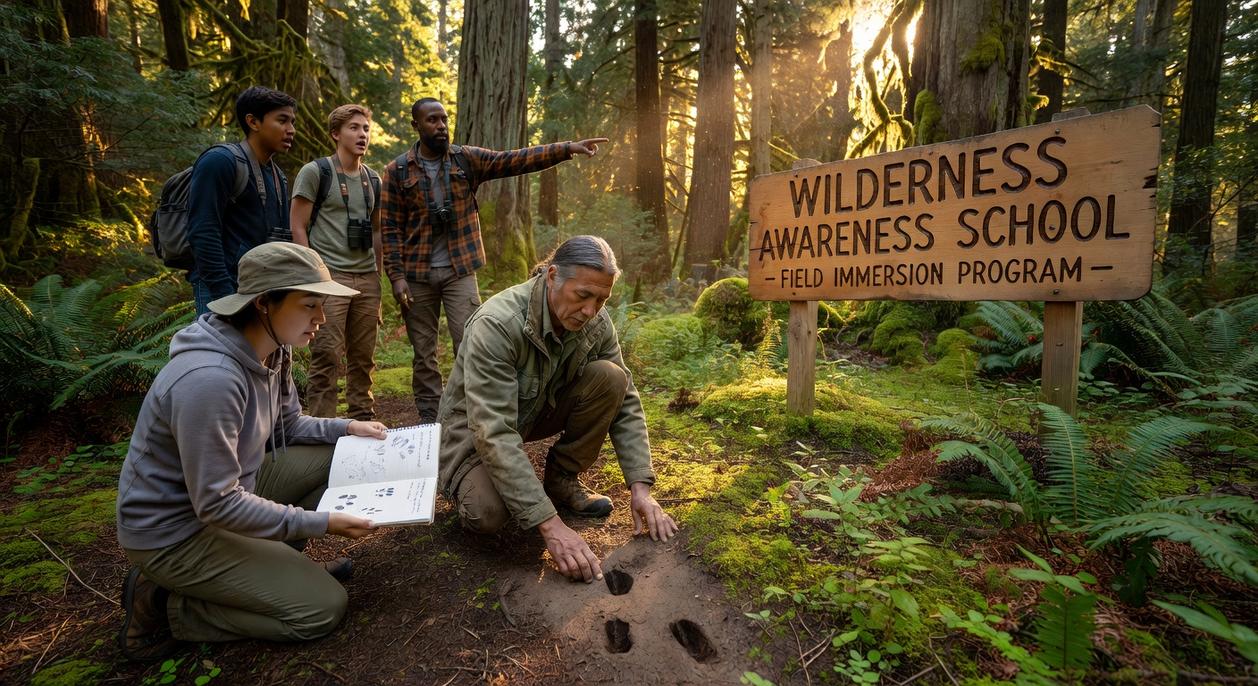
Most people think wildlife safety is about what you do in the moment. It’s not. It’s about what you do BEFORE the moment ever happens.
Prevention is boring. It’s also what keeps you alive.
Make noise on the trail—especially near blind corners, dense brush, or running water where your approach is muffled. Talk, clap, tap trekking poles against rocks. You’re not “ruining the wilderness experience.” You’re preventing a surprise encounter (and surprised animals make bad decisions). Contrary to popular belief, silence isn’t noble—it’s risky.
At camp, store food properly in bear-resistant containers or hang it at least 10 feet high and 4 feet from the trunk. Animals follow scent, not your intentions. Fresh scat (animal droppings), tracks, claw marks, and flattened trails are signs you’re in active territory. This is where situational awareness in wilderness shifts from concept to habit.
Now, if prevention fails:
Bear: Stand your ground. Appear large. Raise your arms. Speak firmly. DO NOT RUN. Running triggers chase instincts (and you will not win that race).
Snake: Freeze. Identify its position. Slowly back away, giving it a wide berth. Most bites happen when people try to move too fast—or get too close for a photo.
Mountain Lion: Maintain eye contact. Make yourself look bigger. NEVER turn your back or run. Pick up children immediately.
Some argue that carrying deterrents alone is enough. It’s not. Tools help, but mindset matters more.
Master basics like camp discipline and awareness before worrying about dramatic survival tactics. Start with smart fire setup practices at firecraft fundamentals safe and efficient fire building techniques. Preparation beats panic. Every time.
The Human Factor: Preventing Navigational Errors
Most survival stories don’t start with storms or wildlife. They start with a simple mistake: a missed turn, a distracted conversation, a quick “I’ll check the map later.” Human error is the most common cause of getting lost (National Park Service search and rescue reports consistently cite navigation mistakes as a leading factor).
The competitive edge? Proactive navigation. Instead of checking your map after confusion sets in, check it regularly while still on the trail. Identify landmarks ahead of time—ridge lines, trail junctions, distinctive rock formations. This builds a mental map and sharpens situational awareness in wilderness before trouble begins. (Think of it as updating your internal GPS—without waiting for “recalculating.”)
If doubt creeps in, use S.T.O.P.: Stop moving, Think calmly, Observe your surroundings, Plan your next step. Pro tip: staying put is often smarter than wandering deeper into uncertainty.
By now, your search for real safety skills should feel answered. Not with fear, but with confidence. In my opinion, that shift matters more than any gadget you could buy. True security outdoors isn’t about brute strength or a backpack stuffed with expensive gear; it’s about practiced awareness. Situational awareness in wilderness is the quiet skill that keeps you ahead of problems before they bloom.
So, start small. On your next outing—even a neighborhood park walk—pause and truly observe. Notice exits, terrain changes, people, weather. Make it a daily habit. (Yes, even when it feels unnecessary.) Confidence grows from competence.
Stay Ready When the Wild Gets Unpredictable
You set out to strengthen your outdoor skills and understand how to stay safer when conditions turn against you. Now you have the framework to prepare smarter, move with purpose, and think clearly when it matters most.
The biggest risk in the backcountry isn’t always the terrain — it’s hesitation, second-guessing, or missing subtle warning signs. Mastering situational awareness in wilderness environments is what separates controlled decisions from costly mistakes. When weather shifts, trails disappear, or daylight fades, your preparation becomes your lifeline.
Don’t wait for a close call to test your readiness. Start refining your trail mapping, shelter setup, and survival response strategies today. Study real-world scenarios. Practice your navigation drills. Pressure-test your gear before you depend on it.
Thousands of outdoor enthusiasts rely on our proven wilderness insights to build confidence beyond the trailhead. If you’re serious about eliminating uncertainty and becoming fully self-reliant outdoors, explore our in-depth survival guides and skill breakdowns now — and take control of your next adventure before the wild tests you.
 Founder & CEO
Ozirian Esthoven has opinions about hidden gems. Informed ones, backed by real experience — but opinions nonetheless, and they doesn't try to disguise them as neutral observation. They thinks a lot of what gets written about Hidden Gems, Camp Setup Essentials, Wilderness Survival Approaches is either too cautious to be useful or too confident to be credible, and they's work tends to sit deliberately in the space between those two failure modes.
Reading Ozirian's pieces, you get the sense of someone who has thought about this stuff seriously and arrived at actual conclusions — not just collected a range of perspectives and declined to pick one. That can be uncomfortable when they lands on something you disagree with. It's also why the writing is worth engaging with. Ozirian isn't interested in telling people what they want to hear. They is interested in telling them what they actually thinks, with enough reasoning behind it that you can push back if you want to. That kind of intellectual honesty is rarer than it should be.
What Ozirian is best at is the moment when a familiar topic reveals something unexpected — when the conventional wisdom turns out to be slightly off, or when a small shift in framing changes everything. They finds those moments consistently, which is why they's work tends to generate real discussion rather than just passive agreement.
Founder & CEO
Ozirian Esthoven has opinions about hidden gems. Informed ones, backed by real experience — but opinions nonetheless, and they doesn't try to disguise them as neutral observation. They thinks a lot of what gets written about Hidden Gems, Camp Setup Essentials, Wilderness Survival Approaches is either too cautious to be useful or too confident to be credible, and they's work tends to sit deliberately in the space between those two failure modes.
Reading Ozirian's pieces, you get the sense of someone who has thought about this stuff seriously and arrived at actual conclusions — not just collected a range of perspectives and declined to pick one. That can be uncomfortable when they lands on something you disagree with. It's also why the writing is worth engaging with. Ozirian isn't interested in telling people what they want to hear. They is interested in telling them what they actually thinks, with enough reasoning behind it that you can push back if you want to. That kind of intellectual honesty is rarer than it should be.
What Ozirian is best at is the moment when a familiar topic reveals something unexpected — when the conventional wisdom turns out to be slightly off, or when a small shift in framing changes everything. They finds those moments consistently, which is why they's work tends to generate real discussion rather than just passive agreement.